Weekend In Mexico City With Willie Colón
About this article
This article is in homage to the passing of Willie Colón. It was first published in December, 1999. It serves as a snapshot in time of Willie Colón's life and days and nights in Mexico City.
Mexico City? What was Willie doing there—and for how long? Those questions circled like a little Ferris wheel in the back of my mind as I looked down from the Aeroméxico jet speeding over the southern tip of Florida toward the Gulf of Mexico. A few hours after flying over one of America’s natural wonders, the Everglades, another natural sight appeared beneath me: El Popo, the enormous, snow-capped Mexican volcano, dwarfing the valleys, hills, towns, and cities at its feet. I had forgotten about this extraordinary expression of one of Earth's pressure valves. Although I remain awed by that magnificent sight, by the time I sat down to write this story, I was even more impressed by another natural wonder to be found in Mexico: Mr. William Anthony Colón Román, better known to us as Willie Colón.
Over the course of three fast, adventurous days, I got the answers to my questions with clarity and wisdom from the musical genius known throughout Mexico simply as “Maestro,” a title that people in Latin America and the Caribbean do not grant lightly. Willie Colón is, above all, about the people. In this, he is like Rafael Hernández, Marco Antonio Muñiz, Bobby Capó, Armando Manzanero, Agustín Lara, and Joan Manuel Serrat. It is no coincidence that these other Maestros have also called Mexico home for a time, walking its streets and gathering inspiration from the people and places that shape their songs.
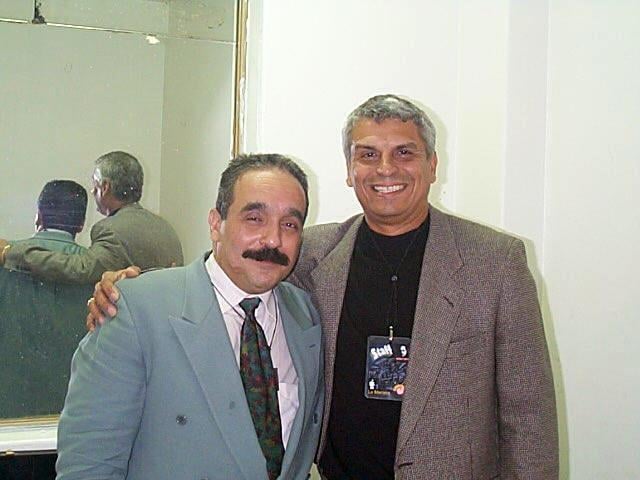
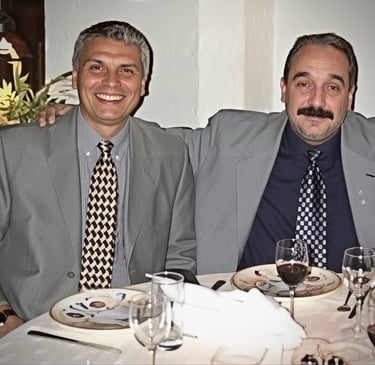
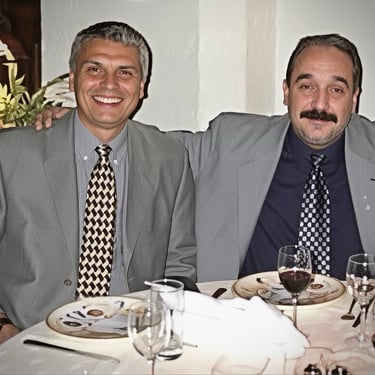
After a hard landing—thanks to the high altitude and thin air beneath the wings—and an unexpectedly smooth customs and immigration experience, I’m surprised to find an escort waiting to take me to my hotel. El Camino Real turns out to be one of the finest hotels I’ve stayed in during my many years of travel. Vast and self-contained, it evokes the Great Gorge Resort that Hugh Hefner owned during the heyday of the Playboy empire. Willie meets me soon after my arrival, driving his full-size SUV that makes the VW Bug taxis buzzing around it look like a giant Hot Wheels collection. We kick off the weekend with a delicious dinner at his favorite Italian restaurant, La Botiglia, joined by his sons and Ernesto, his loyal assistant. Over drinks and appetizers, Willie shares what life in Mexico means to him: “I love it here. The people are so sincerely polite. This is an ancient culture. Here, they’ve cultivated the art of getting along. Imagine twenty-five million people living in an ancient lake bed surrounded by mountains. It must have taken centuries, but they did it.” Then he notices my pocket digital camera and asks, “How about a picture?”After dinner, we pile into Willie’s SUV and head out through the sprawling city. As we drive, he casually mentions that over the coming weekend, he’ll be performing two shows at La Maraka, the oldest salsa club in the city. “The place and I go back a ways. I first performed there in ’73 with the Fania All-Stars. They still treat me like the king. His two shows are being heavily promoted on Mexico City’s salsa station, La Sabrosita, and Willie is clearly excited. “I’m scheduled for a live morning interview. On Friday night, they’re doing a live feed from my dressing room. Next Tuesday, the prime-time show will be all about my music, with another live interview.” I try not to grin, barely able to contain my excitement at the prospect of seeing Willie perform live—and not just once.
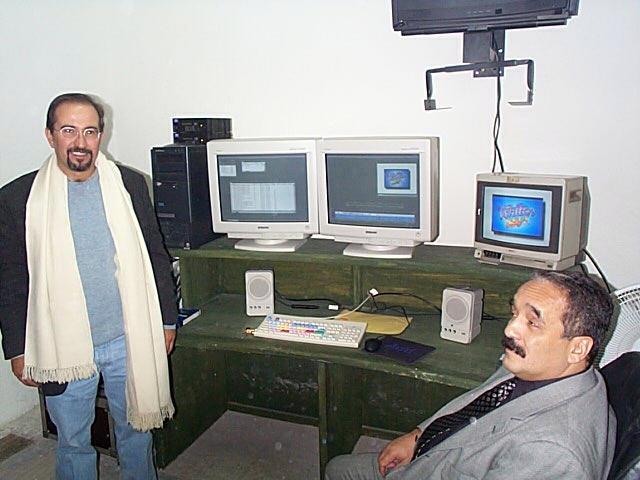
We make a quick stop at a TV producer's studio and are greeted by the genial gentleman behind Willie's upcoming TV show. Alfredo De La Lama is a highly regarded producer and director throughout South America and the Caribbean. He leads us to the viewing room, where early footage is cued up. The material is unedited. As we watch, the producer offers occasional commentary. Even in this rough form, the production values are strong, and the actors are first-rate. Willie appears completely natural on screen, and the comedy scenes have everyone laughing. When the screening ends and the lights come back up, everyone turns to Willie. He is clearly pleased. He recommends a few changes and additions, then jokes, "Do you guys have a button on that console that will make me look like I did when I made my film debut?" That’s a side of Willie that many of his music fans know little about. He has been acting for quite some time, appearing in both films and television shows, including novelas and an iconic episode of Miami Vice. His personality lends itself well to this kind of work. In casual moments with friends, he can turn a serious situation into something funny, catching everyone off guard. When the session ends, we head back to the Camino Real, where I am safely delivered for a good night's sleep.
The next morning, Willie calls from La Sabrosita, where he has just finished a live interview. Soon after, he picks me up, and we head into the streets of Mexico City. As we drive down Boulevard Reforma, I am struck by the sheer number of fountains, statues, and monuments. Willie gestures toward them and says, “Everywhere you go, there is culture.” We continue along broad avenues lined with monumental public art. Just when I think there can’t be any more, Willie motions to the right. “Look at the Aztec obelisk on this side. And that revolutionary statue over there.” At a stoplight, a street vendor comes to my window, selling a ten-part series on Mexican history for the equivalent of about ten dollars. Willie buys it. “I bet you don’t see things like this on the streets back home. Knowledge of their history is vitally important to the Mexican people; it’s what guarantees their cultural and political independence. Mexico has its problems, but they are justifiably fierce and zealous about their sovereignty. Their national anthem calls every son of Mexico a soldier for the motherland. In this respect, other South American and Caribbean countries should learn from them.” We drive to a newer, higher part of the city, Bosques de las Lomas. I tell Willie it reminds me of Malibu and Bel Air. We turn onto a quiet, tree-lined street of spacious homes and ivy-covered walls. Willie’s home is modern Mexican. A central courtyard holds a spa and pool. His office faces the main house, and the lower levels include a sauna and other amenities. Best of all is the view of the surrounding mountains. “This is a great home,” Willie says, “but sometimes we miss our place in New Rochelle. Since we get to go back often, it’s not so bad.” As we sit, the years rewind. We remember how we first met as 20-year-old kids, when I was working with the Summer Arts in the City program, staging plays and concerts in New York’s streets from the back of a flatbed truck. Willie, Héctor, and the guys were the featured band. We kept in touch over the years, working together with the New York governor’s social and cultural programs, and later hosting each other in Miami during his many appearances there. Settling in the comfortable surroundings, we talk about music, films, history, and politics. Willie turns to a subject that clearly matters deeply to him. His eyes sparkle as he talks about his planned run for New York City Public Advocate.“There are serious issues in New York City that are being ignored or glossed over, and they all affect our people. When I ran for Congress and the State Senate, it became apparent to me that many New York Latino leaders are too quick to compromise when they could get us a better deal.“I’ve been in business for a long time. After spending years as an entertainer, I learned that if you don’t also become an astute businessman, your money can easily wind up elsewhere, sometimes even before the gig is over. I changed that quickly, and basically, that’s what needs to happen in New York City. I want to help make sure that what’s ours winds up where it’s supposed to. I want to see all New York City residents get a fair deal, not just proclamations, platitudes, parades, plaques, show-off seats on placid commissions, or any of that ego-power stuff. That doesn’t put food on the table or computers in schools. Willie understands both poverty and the politics that surround it. He believes public advocacy in New York is, in some circles, stuck in the past: “When I hear some of these political insiders talk, I wonder if this is still 1969. Some of these people are just out of touch. Most of them have never used a computer and have no clue what the Internet really is about." Education, he says, is the most important real issue in the Latino community, and one that fills him with frustration: “When I speak to kids in New York, I walk away awestruck by how much human potential is being wasted. These kids are smart and eager to learn. All they need are basic tools and a fair shot, not meandering curricula and moronic ‘modules’ designed mainly to benefit the consultants and contractors who create them. We should invest our money wisely in an electronic educational infrastructure. Let’s pressure school boards to lead this effort, embrace the true spirit of 21st-century education, or step aside. Let’s dismantle 19th-century models, replace century-old chalkboards with 21st-century digital panels, and give every kid access to a computer and the Web. Show them how to log on, turn them loose with proper supervision, and you’ll soon see the difference. Instead of traditional written book reports, let’s have students share their favorite parts and interpretations through digital group presentations. This not only makes the work more engaging and independent, but it also builds teamwork and leadership skills. We’d be saving entire forests at the same time". We move on to talk about Puerto Rico's struggles, starting with Vieques. Unlike other artists who stayed away until it became fashionable to take a stand, Willie visited the island at the very beginning of the protests. His presence was so controversial that several pro-Navy legislators boycotted an award ceremony for him at the Puerto Rican Capitol building. We also discuss the Carpetas, the illegal, secret police files the Puerto Rican government kept on thousands of citizens (including this author), and the widespread blacklisting of great artists by Latin media. Some right-wing radio and television stations still refuse to play Willie’s music and that of others because it clashes with the station owners’ politics. Willie has strong views on all of this and often shares them in his own forum, part of his popular website. An early coder, he says, “I’ve been on the ’net long before Windows arrived,” as we peruse his new website and forum on his laptop. I glance at my watch and notice it’s nearly dinnertime just as the housekeeper announces dinner. Wondering whether this is a coincidence or some Aztec mind trick, I follow Willie and his sons to the dining room. After dinner, Willie and I linger at the table, talking about music over coffee and a smoke. When I ask him what’s new, he answers enthusiastically: “Right now, I want to do an album with the combined rhythms from the other Caribbean islands, like Jamaica and the D.R.. I’m in the beginning stages of the project. Want to hear some?” Willie adds that he wants to broaden his horizons even more: “You know, I’d also like to do something with Juan Luis Guerra or that great group in Puerto Rico, Fiel a la Vega. Their lyrics are intense.” Then he puts me on the spot, asking which of his songs I like. I passed the test by naming “Asia,” “Falta de Consideración,” “Ah Ah, Oh No,” “Sin Poderte Hablar,” and “Contrabando,” and seemed to earn extra points for explaining what I like about each one. I mentioned that I tried to buy “Demasiado Corazón” in Puerto Rico, but it was sold out. He hands me a copy. We realize it’s getting late. Everyone has to get ready for the first gig, scheduled for 12:30 a.m.
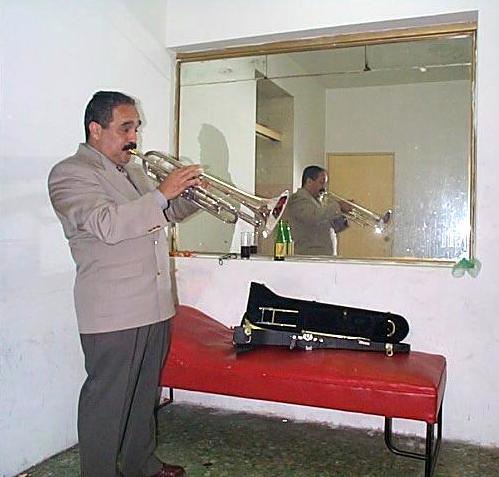
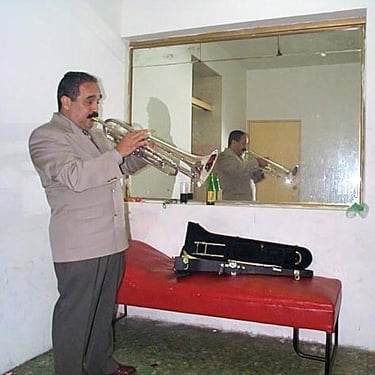
We pull up to La Maraka around midnight. The street is deserted, and Willie wonders if there's anyone inside. Then we turn a corner, and I point to an overflowing parking lot. As we walk toward the entrance, people begin to recognize Willie and call out enthusiastically. “¡Hola, Willie Colón! ¡Hola, Maestro! ¡Señor Colón, buenas noches!” The crowd escorts us through the lobby until we reach the backstage area, where security finally turns them back. As I walk in with the group, one of the larger security guards stops me, and Willie quickly vouches for me: “He’s okay.” The guard nods and says, “Get him a stage pass.” A moment later, someone hands me one, and I loop it around my neck. It has since become a cool souvenir, sparking a “Please, let me have it!” campaign among my friends. After greeting the club empresario, managers, and a few others, Willie settles into his dressing room for a pre-show radio interview with La Sabrosita. The two-story club is wall-to-wall people. The upper level, with its two additional dance floors, is also packed. At a nod from Willie, everybody files out of the dressing room. It's time to leave the Maestro alone, to warm up the horns, and to tune his voice. As I reach for the doorknob, Willie says, “Stay, I can do this with you here.” He picks up the horn, and out come some very famous notes, the intro to "Idilio."
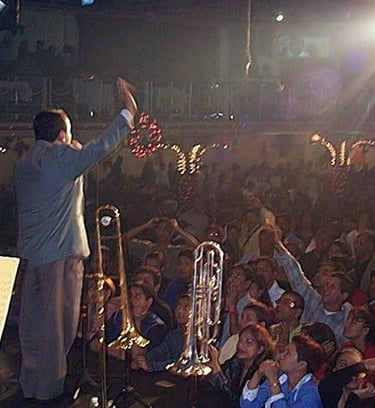
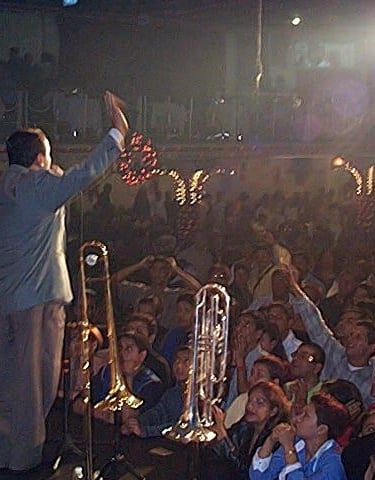
Between warm-ups, Willie tells me about some of the strange and funny things that have happened to him during concerts and club gigs. I ask why he once thanked boxing champ Roberto Durán for his help during a Miami appearance. "I had just done a gig in New York City," he says, "where this jerk in the audience was being really disruptive. Let's just say that before I decided to settle the guy down, Roberto was there to lend a hand or two." He’s about to share another story when we hear a huge roar from the crowd and the announcer’s voice introducing him. The front of the stage is jammed with fans, and security is everywhere. I’m standing backstage with Ernesto when the band launches into "Contrabando." Willie comes out, shaking hands with fans, and pandemonium breaks out. A young man tries to climb onstage, but security stops him. When Willie starts to sing, the crowd goes wild. He glances back at me, smiles, and gives me a thumbs-up. Before the song ends, the same fan makes it onto the stage again, but security reacts instantly. Later in the set, he manages to scramble up once more and is grabbed hard by the guards. Willie stops and asks the young man what he wants. The fan points to his girlfriend, who’s holding a camera. Willie tells the four security men to let him go, throws an arm around him, and turns toward the camera. It flashes along with many others. The crowd explodes in applause and cheers. Willie tells the audience he loves them, but that it’s safer if they don’t come onstage while he’s trying to please them with his songs. He promises autographs and photos after the show. The crowd jumps, screams, and eventually settles down. The next two hours fly by. The shifting lights cast surreal shadows across the stage, like something out of a music video. Standing up there, you feel like part of the whole scene; it’s hard not to sway and sing coro, especially when the backup singers are smiling at you. Willie catches me singing, grins, and gives me another thumbs-up. One of my secret wishes has just come true: I’ve sung coro with Willie Colón.
Watching the unspoken communication between Willie and the band is amazing. Energy radiates from Willie, spreads through the band, and then sweeps over the entire audience. The spell is contagious. Heat and smoke deepen the dreamlike atmosphere. I walk through the club to take in the dancers, the people at the tables, and those leaning on the balcony railings.I move to the front of the stage and stand with the swooning fans, who keep shouting to Willie that they love him or begging for particular songs. Others are content just to sing along. They know every word of every tune. In the middle of this crowd, it feels like watching a Santería session. These people are entranced and loving every minute. When the final song ends, Willie says goodnight and is quickly and heavily escorted to the dressing room. I tell him how great it was for the crowd. He says, "Yeah, but a couple of things need to be changed so that tomorrow night we can do it even better." I understand more clearly why they call him Maestro. For the next hour, Willie poses for photos with dozens of fans and talks with people who want a moment of his time. Producer Alfredo De La Lama arrives with his sister and her husband and invites us out for a nightcap at a great club. Willie politely declines, explaining that he has to work again the following night. Later, he turns to me and says, "When I have two-night gigs, I can’t do that getting-home-in-the-daylight thing. It’s murder on my throat. Let’s get a bite to eat instead." It’s after 4 a.m. when we head to the Camino Real, which has a 24/7 restaurant. The place is empty when we arrive. The hostess tells us they’re serving breakfast. When Willie asks if he can get a hamburger, the cook comes out of the kitchen to answer personally: “For you, Maestro, yes!” While we wait for our food, I show Willie some of the pictures from earlier that night. He likes one of the two of us and asks me to email it to his office. Over the meal, Willie and I trade personal anecdotes, some about mutual friends and acquaintances. I tell him my private reason for liking “Falta de Consideración,” and he shares his reason for writing it. We laugh and agree never to tell anyone. When we finish eating, I realize Willie has just enough time to get back to Bosques de las Lomas before sunrise. He laughs when I say, “We sound like after-hours vampires, you know.” I remind him of the after-hours joints in our old New York neighborhoods and how, whenever the door opened, everyone would turn away from the daylight, just like vampires. As he drives away, I walk back to my room, already thinking that in a few hours it will be time to return to La Maraka.
On the second night, the impossible happens: Willie and his band, Legal Alien, somehow surpass the previous evening’s performance. At 2:30 a.m., Willie steps onto the stage to face an even larger crowd. A teenage girl makes four determined attempts to kiss him before security finally pulls her away. Salsa spills from the stage into every corner of La Maraka; even the usually stone-faced security guards start dancing. Backstage is no different. People are dancing, clapping, singing coro, and grinning from ear to ear. Experiencing a Willie Colón concert is like watching a night train thunder through a sleepy town. Before we realize it, Willie is gone, leaving the stage after a fifteen-minute encore of “Gitana.” Gradually, everyone begins to shake off the Legal Alien abduction trance. As on the previous night, fans form a long line for photos and autographs, but it’s too late to tend to everyone. When we finally leave La Maraka, Willie is chased by a swarm of fast-moving fans, desperate for a picture, a signature, or even a scrap of his coat. Security quickly closes in around his SUV. One woman manages to reach his door. She refuses to back down and is on the verge of tears as she explains that the autograph is for her husband, an even bigger fan who couldn’t attend. Willie patiently takes several minutes to learn her husband’s name and write him a special message.
Willie's SUV cuts a wake through the early-morning fog. He has graciously offered to drive me to the airport for my flight home, but I can tell he’s tired. To spare him the extra drive, I suggest he drop me off at El Camino Real instead of going all the way to the terminal. He thanks me for thinking of him. I thank him for the entire weekend. Later, at the airport departure gate, the sun lifts over the ring of mountains that cradle the city. I slip on my sunglasses and close my eyes, an after-hours salsa vampire for just one more night. An hour later, as the jet zips past the massive volcano, I drift off, content after witnessing two of the most awesome natural wonders in and around Mexico City.
About the author
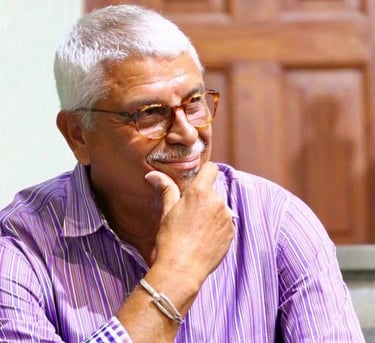
Peter Avilés is a native of Rincón, Puerto Rico, where his family has lived since Spanish colonial times and has played an active role in the town’s development for many years. His latest book, Rincón Histórico, A Century of Change, was lauded by the critics. His previous book, Memoirs of a Patriot, traces his father's life, focusing on his personal and political struggles. Although Peter did not share all of his father’s beliefs, he completed the manuscript for its historical value. As creator and editor of the first website dedicated to Rincón, Peter opened a virtual window to the world, showcasing the images, stories, and places that helped shape modern tourism in the town. Beyond authoring two books and many articles for newspapers and magazines, Peter is an avid photographer and creator of short films, one of which received a special award at an international film festival. He also organizes cultural and festival events, including the celebration of the 50th anniversary of international surfing in Puerto Rico and the Puerto Rico International Surfing Hall of Fame—both major sporting and economic successes for Puerto Rico’s tourism industry. In recognition of his achievements and contributions to his hometown, the Mayor of Rincón proclaimed Peter a Distinguished Citizen of Rincón. Most recently, Peter was awarded for his literary contributions to the Puerto Rican community.